
Cybersecurity is not only about protecting systems and data. It is about protecting operations, revenue, client relationships, compliance, insurability, reputation, and the confidence leadership places in the organization’s ability to respond.
CTN Shield helps mid-market organizations reduce exposure, identify threats earlier, prepare for disruption, and build a more resilient operating environment.
A cyber incident rarely remains a technology problem. It can become:
The systems may be technical, but the consequences belong to the entire organization.
CTN Shield connects cybersecurity with business continuity, governance, compliance, insurance requirements, workforce behavior, vendor exposure, and executive accountability.
The goal is not simply to install more security tools. The goal is to create a more defensible and resilient organization.

No security program can guarantee that an attack, mistake, or disruption will never occur.
A mature cybersecurity model must help the organization:
CTN Shield is built around this complete view of cyber resilience. It helps leadership move beyond the question:
And toward the more important questions:
Are our most important risks being actively managed?
Could we respond effectively?
Could we prove it?
Security events can interrupt employee productivity, customer service, production, clinical care, financial activity, communications, and other critical workflows. Shield helps connect protection and response planning to the operations the organization cannot afford to lose.
Organizations hold information entrusted to them by employees, clients, patients, donors, partners, and other stakeholders. Protecting that information requires more than software. It requires access controls, monitoring, governance, employee awareness, and accountability.
Cyber insurers increasingly ask organizations to verify specific controls, procedures, and documentation. Coverage alone does not confirm readiness. The organization must understand what it represented during the application process and whether those controls remain active.
Cybersecurity requirements increasingly appear in contracts, vendor reviews, procurement processes, and customer questionnaires. An organization may lose an opportunity because it cannot demonstrate that its security responsibilities are being managed.
The long-term cost of an incident may include lost confidence, damaged relationships, delayed growth, increased scrutiny, and leadership distraction. Cyber resilience protects more than infrastructure. It helps protect the organization’s ability to move forward.
Threats do not follow business hours. CTN Shield helps provide ongoing visibility into activity across users, devices, systems, and the broader environment so suspicious behavior can be identified and evaluated earlier.
Monitoring should not exist as an isolated stream of alerts.
It must connect to clear escalation, investigation, response, and executive reporting.
Identifying suspicious activity is only valuable when someone is prepared to act.
Managed detection and response can help:
The precise CTN Shield monitoring and response scope should be clearly defined during implementation.
Laptops, workstations, servers, mobile devices, shared systems, and remote users create many of the paths attackers may attempt to exploit.
CTN Shield helps protect endpoints through layered controls designed to identify, block, contain, and report suspicious activity.
Endpoint security should also connect with:
Stabilization creates a more dependable foundation for longer-term improvement.
Email remains one of the most common ways attackers target employees and executives.
CTN Shield helps address:
Technology controls matter, but they must be reinforced by employee awareness and clear reporting procedures.
Many security incidents begin with a compromised account rather than a direct attack on infrastructure.
CTN Shield helps organizations strengthen how access is granted, verified, reviewed, and removed.
This may include:
Access should reflect what employees, vendors, and partners actually need to perform their roles

A vulnerability is not automatically the organization’s most important risk.
CTN helps evaluate vulnerabilities according to factors such as:
The goal is not simply to generate a long list of findings.
It is to prioritize remediation according to meaningful business exposure.
Employees are not simply a security problem to manage.
When they understand their responsibilities, they become an important layer of protection.
CTN Shield can support awareness around:
Training should be relevant, practical, and connected to the employee’s actual role.

The organization’s risk does not end at its own systems.
Software vendors, service providers, contractors, remote-access partners, cloud platforms, and other third parties may have access to important systems or information.
CTN Shield helps leadership evaluate:
Vendor risk must be managed as part of CTN Operating Framework.
An incident-response plan should do more than exist in a document.
Leadership and key teams need to understand:
CTN Shield helps connect technical response with business leadership, communications, insurance, compliance, and continuity.
Cyber resilience is measured partly by what happens after defenses are tested.
CTN helps organizations evaluate:
Shield works with Core and Trust to help ensure that security response, technology recovery, and compliance responsibilities are coordinated.
Leadership does not need another report filled with alerts and technical terminology.
It needs a clear view of:
CTN Shield helps translate cybersecurity activity into executive decisions.
CTN Core is closely connected to the other capabilities within CTN Operating Framework.
Address preventable exposure through practical controls, prioritization, awareness, and operating discipline.

Establish the technical and executive procedures required to investigate, contain, communicate, and make decisions.

Use incidents, assessments, changing requirements, and new threats to strengthen the organization continuously.
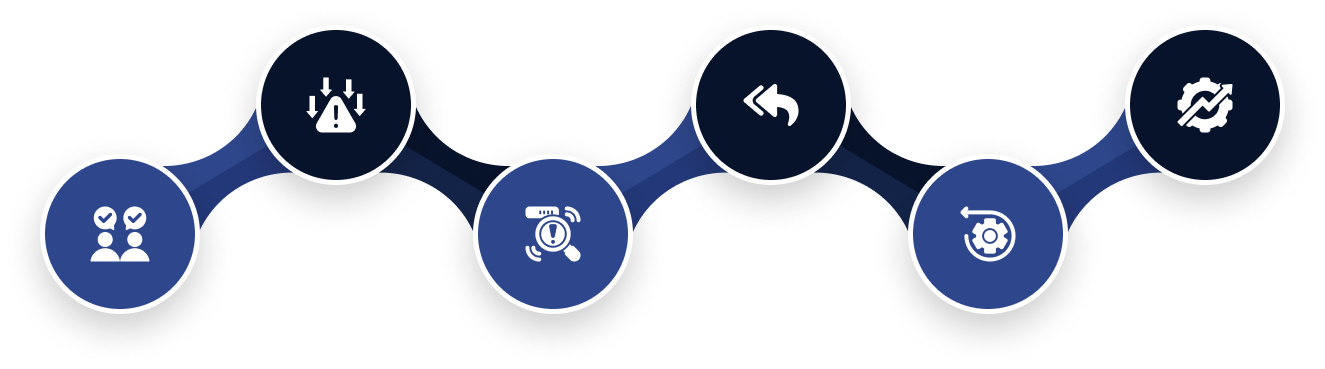
Identify the organization’s critical systems, information, workflows, people, vendors, obligations, and operational dependencies.
Maintain visibility into suspicious activity and emerging threats.
Protect the organization’s ability to resume critical operations and meet important commitments.
Cyber resilience is not a one-time implementation. It is an ongoing operating capability.

Security priorities are connected to the systems, information, relationships, and operations that matter most.
Leadership and technical teams have clearer roles, procedures, and escalation paths.
Security planning is connected to continuity and recovery rather than ending at threat prevention.
The organization has a clearer view of required controls, documentation, and operating responsibilities
Active security controls can be connected with policies, evidence, reporting, and governance.
Leadership receives information framed around business risk, priorities, and decisions.
The organization is better prepared to respond to security questionnaires, vendor reviews, and contractual requirements.



Security supported by a stable, documented, and actively managed operating environment. Core maintains the technology foundation. Shield helps protect it and prepare the organization for disruption.
AI adoption supported by appropriate access controls, data protection, vendor review, governance, and monitoring.

Independent assessment, risk prioritization, cyber insurance readiness, continuity reviews, executive dashboards, and ongoing oversight.
Active security controls connected to governance, policies, documentation, evidence, audits, insurance, and continuous compliance. Shield helps operate the protections. Trust helps ensure that they can be governed and demonstrated.
Access to cybersecurity analysts, engineers, project specialists, compliance professionals, and interim security leadership.
These capabilities work together because cybersecurity is not separate from the organization’s broader operating responsibilities.
Cybersecurity focuses on protecting systems, information, users, and operations. Compliance focuses on understanding requirements, establishing governance, maintaining documentation, producing evidence, and demonstrating that responsibilities are being fulfilled.
An organization may have strong security tools without having a defensible compliance program. It may also have well-written policies without having active and effective security controls.
CTN Shield and CTN Trust work together to connect operating security with:
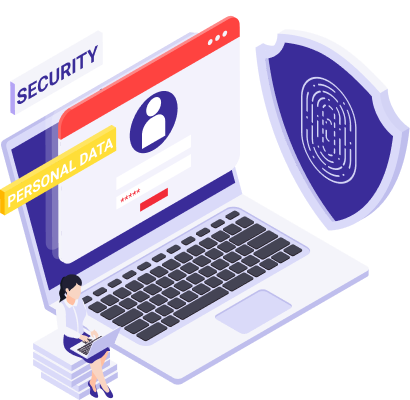
The master website strategy defines Shield around protection, resilience, threat response, insurance readiness, third-party risk, identity controls, awareness, and incident preparation.
Insurance applications and renewals increasingly require organizations to answer detailed questions about controls, access, backups, monitoring, incident response, employee training, and documentation.
Leadership should understand:
CTN can help evaluate cyber insurance readiness without requiring the organization to begin with a complete Shield engagement.


A focused review may include:
The NextGen Strategy identifies cyber insurance readiness and business continuity reviews as high-value advisory entry points that can lead naturally into Shield when additional capability is required.
Cyber risk has different consequences in different environments.
Professional services firms must protect confidential client information, communications, work product, remote users, and the trust on which client relationships depend. The existing industry material emphasizes endpoint monitoring, email protection, vulnerability management, and practical security educations.
Healthcare organizations must protect PHI while maintaining clinical availability and working within the constraints of legacy systems, clinical workflows, audits, and insurer expectations. The current Healthcare industry resource connects Shield with continuous monitoring, endpoint protection, managed response, vulnerability remediation, phishing defense, and security awareness designed for healthcare teams.
Financial organizations must protect sensitive information, maintain client confidence, manage fraud and credential risk, demonstrate controls, address third-party exposure, and meet continuity expectations. CTN’s Financial Services material emphasizes continuous monitoring, endpoint protection, managed detection and response, prioritized vulnerability remediation, phishing defense, role-specific awareness, and access controls for sensitive systems.
Manufacturing cybersecurity must account for both traditional IT and operational environments. Security decisions may affect production, safety, vendor access, plant operations, maintenance windows, customer requirements, and supply-chain relationships. The Manufacturing industry resource highlights IT and OT threat detection, engineering workstation protection, vulnerability management around production constraints, secure vendor access, and incident planning that accounts for operational impact.
Nonprofits must protect donor, constituent, employee, volunteer, and program information while working with constrained budgets and mixed technology environments. The Nonprofit resource connects Shield with donor-database protection, endpoint security, vulnerability management, remote-user protection, and awareness for bots.
Engaging CTN Shield does not always require replacing every current provider or platform.
CTN can work:
The first objective is to understand what the organization needs, which responsibilities are already covered, and where meaningful gaps remain.

A Shield conversation may be appropriate when:
You do not need to know which security service is missing before beginning the conversation.
CTN can help assess the current condition and identify the right next step.

Some organizations have security tools and providers but lack consistent executive oversight.
An ongoing Cyber Oversight engagement may include:
This provides leadership with a recurring business-level view without requiring every engagement to begin as a complete managed-security transition.
The NextGen Strategy identifies recurring cyber oversight and executive reporting as part of CTN’s advisory
CTN has helped organizations navigate changing technology, security, compliance, and operational requirements since 1997.
The future Shield proof framework should include:
The site should prioritize business outcomes and organizational confidence rather than displaying an overwhelming wall of security tools and certifications.

“The amazing thing, and probably the best aspect of their service, is that CTN removed me from day-to-day IT tasks. CTN is very all our needs. Our employees now work directly with their help desk, and I have gained valuable time to focus on other aspects of my job. They are my employees and teaching them.”
“CTN Has Made My Job A Lot Easier.”
“The amazing thing, and probably the best aspect of their service, is that CTN removed me from day-to-day IT tasks. CTN is very all our needs. Our employees now work directly with their help desk, and I have gained valuable time to focus on other aspects of my job. They are my employees and teaching them.”
“CTN Has Made My Job A Lot Easier.”
Many organizations have cybersecurity tools but still lack a clear view of whether the business is prepared to respond, recover, and demonstrate its position.
This guide will help leadership evaluate:
Begin with a conversation about your operations, data, users, providers, insurance requirements, compliance pressures, incidents, vendors, and leadership concerns.
CTN will help determine whether the appropriate next step is:
Cybersecurity should not be measured only by the number of tools deployed.
It should be measured by whether the organization is better prepared to protect what matters, make decisions, respond, recover, and continue operating.